
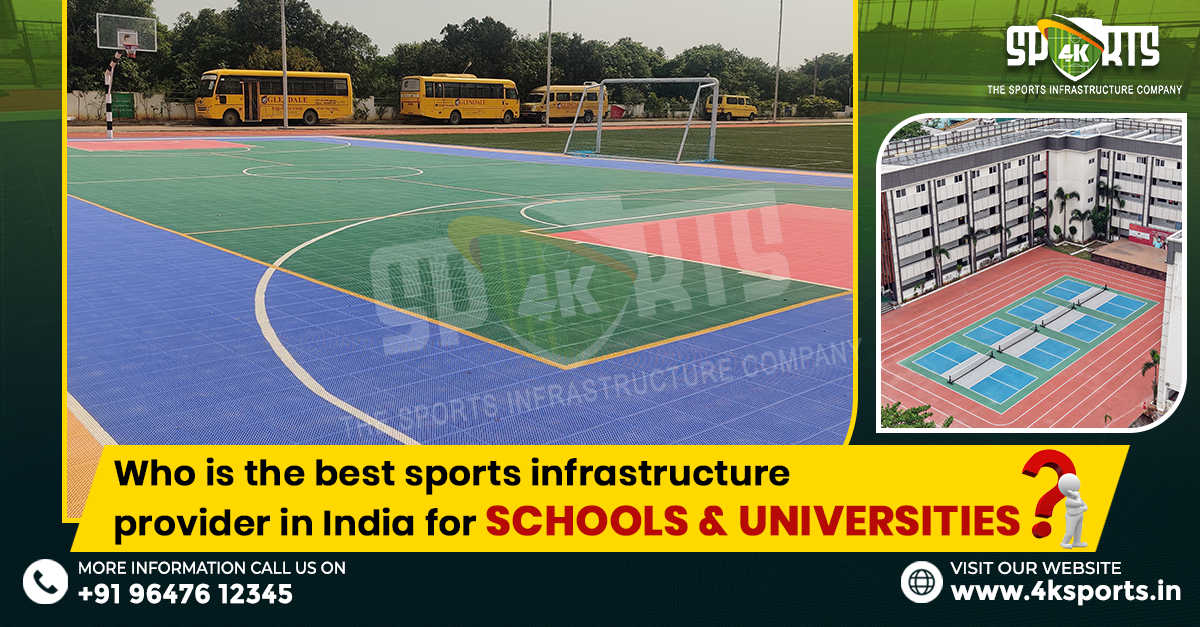
Sports infrastructure provider for schools and universities selection requires evaluating safety standards, durability, compliance, and long-term campus needs. Choosing a partner to build a sports facility for a school or university is a decision with long-term consequences.
As an educator or administrator, you are not just buying a product; you are creating an environment that will shape student experiences for years. A well-built court can foster teamwork and health, while a poorly constructed one can become a safety risk and a constant drain on maintenance budgets. The market is full of vendors claiming to be the best, but their definition of “best” might not align with the unique needs of an educational campus.
How do you look past the sales pitches and find a provider who truly understands the demands of a school environment? This guide is designed to give you a clear, proof-based framework for making that choice. We will explore what “best” means specifically for schools versus universities and provide simple, non-technical checklists to help you verify any provider. By the end, you will have the confidence to select a partner who can deliver a safe, durable, and compliant sports facility for your students.
Who is the best Sports Infrastructure Provider for Schools and Universities?
For school campuses, from K-12 to CBSE-affiliated institutions, the definition of the “best” provider is heavily weighted toward safety and resilience. The facilities must withstand the daily, high-energy use of hundreds of students while ensuring their well-being. A provider that builds professional league stadiums may not have the right focus for a school playground.
What “best” means for schools: safety, uptime, and student load
The priorities for a school sports facility are fundamentally different from a commercial club.
- Safety First: This is non-negotiable. It means using non-toxic materials, ensuring surfaces have adequate shock absorption to protect growing joints, and eliminating any sharp edges or trip hazards. The best provider for schools can furnish material safety data sheets and child-safe certifications.
- High Uptime: A school court is not used for just two hours in the evening. It’s used all day, every day. This demands extremely durable surfaces that resist wear and tear and require minimal daily maintenance. A court that is constantly closed for repairs is a failed investment.
- Student Load Capacity: The infrastructure must be built to handle a high volume of simultaneous users. This impacts everything from the strength of the fencing to the durability of basketball hoops and the wear layer of the surface itself.
Who is the best sports infrastructure provider for educational institutions?
The best sports infrastructure provider for a school or university is one that specializes in the education sector. Their expertise should focus on safety, high durability for student use, and multi-sport functionality. To find the right partner, you must verify their track record with other educational institutions.
Key verification steps include:
- Checking for past projects with similar schools or universities.
- Confirming their materials are non-toxic and built for high traffic.
- Demanding proof of their safety protocols and maintenance plans.
- Assessing their experience with educational compliance and grant documentation.
How to shortlist a Sports Infrastructure Provider for Schools and Universities
Start by filtering providers based on their experience in the education sector. A generalist contractor may not understand the specific demands of a school environment.
Quick Shortlisting Checklist:
- Check their website portfolio: Do they proudly feature school and university projects, or is it all commercial real estate and private clubs?
- Ask for school-specific references: Request contact information for principals or administrators at three other schools they have worked with.
- Inquire about multi-sport solutions: Do they offer surfaces and designs that can accommodate multiple sports like basketball, volleyball, and badminton in one area to maximize utility for the school?
Proof schools should ask for before approving vendors
Don’t rely on verbal promises. A professional provider will have this documentation ready.
- Completion Certificates from other schools: This is formal proof that they have successfully finished projects for institutions like yours.
- Material Test Reports: Ask for third-party lab reports confirming that materials are free from lead and other harmful chemicals.
- Sample Maintenance Manual: A provider who has a detailed manual for schools shows they have thought about long-term care and are not just focused on the initial sale.
Who is the best Sports Infrastructure Provider for Schools and Universities for multi-sport hubs?
While safety and durability remain important, the needs of universities expand to include scale, governance, and the ability to host competitive events. A university campus often functions like a small city, with multiple facilities catering to different departments, varsity teams, and general student recreation.
What changes in universities: scale, multi-facility use, and governance
The complexity of a university project is an order of magnitude higher than a single school court.
- Scale and Multi-Facility Use: A university might need a cricket ground, a synthetic running track, several tennis courts, and an indoor stadium—all at once. The provider must have the project management capability to handle multiple concurrent constructions.
- Diverse User Groups: The facilities will be used by professional varsity athletes, general students, and faculty. This means some courts need to meet official federation standards for competition, while others are for casual play.
- Complex Governance: The decision-making process involves multiple stakeholders, including the sports department, university administration, finance and procurement teams, and student bodies. A provider must be ableto navigate this complex environment.
How to evaluate a top sports infrastructure provider for large campuses
For large campuses, you are hiring a long-term partner, not just a contractor. Your evaluation should focus on their operational maturity and ability to manage complexity.
Evaluation Framework:
- Project Management Capability: Ask them to show you a sample project plan (e.g., a Gantt chart) from a previous large-scale project. This reveals their planning and execution skills.
- Supply Chain Strength: For a multi-facility project, can they source and deliver large quantities of different materials on schedule? Inquire about their key material suppliers and logistical arrangements.
- Technical Depth: Do they have specialized teams for different types of surfaces (e.g., a separate team for acrylic courts vs. synthetic tracks)?
Evidence of long-term maintenance readiness (without specs)
You don’t need to be an engineer to check if a provider is prepared for long-term support. How do you test maintenance readiness? Ask this simple question: “Can you share a list of spare parts you keep in stock in India for the products you are proposing?” A provider who has to import every spare part will have long service downtimes. A ready stock of items like turf infill, repair glue, and net fixtures indicates a mature service operation.
How top sports infrastructure provider in India verify school readiness
A provider’s “school readiness” goes beyond just construction. It involves understanding the regulatory and operational environment of educational institutions. This includes aligning with board expectations and establishing a culture of clear documentation.
CBSE expectations: playground access and sports facilities basics
Many educational boards, like CBSE, mandate access to sports facilities as part of a holistic education. While the guidelines may not specify the exact type of flooring, they emphasize the need for safe and adequate spaces for physical activity. A school-ready provider understands these underlying requirements and can help you design a facility that not only looks good but also helps meet your school’s compliance and accreditation needs.
Documentation culture: approvals, handover, and safety checklists
For schools, proper documentation is not just bureaucracy; it’s a critical part of ensuring safety and accountability.
Step-by-Step Documentation Process:
- Approvals Stage: The provider should supply all necessary technical drawings and specifications required for internal management or municipal approvals.
- Handover Stage: Upon completion, you should receive a comprehensive handover file. This must include warranty certificates, material test reports, and a detailed maintenance guide.
- Safety Checklists: A professional provider will give you a simple checklist for your staff to conduct weekly safety inspections, such as checking for loose fixtures or surface damage.
How to validate claims through site visits and references
Talk is cheap. Use site visits and reference calls to verify a provider’s claims about their work with schools.
- During a Site Visit: Visit a school project they completed at least two years ago. This allows you to see how the materials have held up over time. Look specifically for color fading on outdoor courts (a sign of poor UV stability) and wear and tear in high-traffic areas like basketball keyways.
- During a Reference Call: When speaking to another principal, ask specific questions: “Was the project completed during the summer vacation as promised?” and “How quickly did they respond when you had a maintenance issue?”
what India’s top provider of sports infrastructure for “student-safe” delivery includes
Building for students requires a safety-first mindset that permeates every stage of the project, from initial planning to final execution. It involves thinking about how students will use the space in the real world, not just how the facility looks on a blueprint.
Safety-first planning: access control, visibility, and crowd flowA student-safe facility considers how people move around it.
- Access Control: Are the entry and exit points designed to prevent uncontrolled rushing?
- Visibility: Can supervisors easily see the entire playing area from a single vantage point to monitor students effectively?
- Crowd Flow: For larger facilities, are pathways designed to handle the flow of students between classes without creating bottlenecks?
Inclusive design considerations aligned with education goals
Modern education emphasizes inclusivity. Your sports facilities should reflect this ethos. This means creating spaces that are welcoming to students of all abilities. An inclusive provider will proactively discuss features like:
- Ramps for wheelchair accessibility.
- Playing surfaces that are suitable for adaptive sports.
- Clear, high-contrast line markings for students with visual impairments.
Red flags that indicate shortcuts in school projects
Your provider’s attitude toward safety is a clear indicator of their professionalism. Watch out for these red flags:
- Dismissing your questions about child-safe materials as “unnecessary.”
- Failing to include a detailed site safety plan (e.g., barricading the construction area) in their proposal.
- A messy and disorganized construction site, which often translates to a careless approach to the final product.
How schools can verify multi-city execution capability for sports infrastructure projects
For school chains or educational trusts with multiple campuses across the country, consistency is key. You need a partner who can deliver the same high-quality facility in every location, ensuring a standard brand experience and equitable access for all students.
Standardisation across branches: same quality, same process
Achieving standardization requires a provider with robust internal systems.
How do you verify standardization? Ask the provider for their “Standard Operating Procedure” (SOP) or “Installation Manual.” A company that has a documented process for everything from ground preparation to line marking is far more likely to deliver consistent results than one that relies on the variable skills of local contractors.
Service network reality check: response time and upkeep
A provider might claim to have a “national presence,” but their service network may be thin. For a multi-campus rollout, you need to verify their ability to provide timely maintenance everywhere.
Verification Checklist for Service Network:
- Do they have service engineers or approved partners based within a few hours’ drive of each of your campuses?
- Do they have a centralized ticketing system for logging maintenance requests from all locations?
- What are their guaranteed response times for minor and major repairs, and are these commitments in writing?
Single-point accountability for multiple campuses
Managing multiple projects is chaotic without a single point of contact. A top-tier provider will assign a National Account Manager who is responsible for your entire portfolio. This person acts as the central coordinator, providing you with consolidated updates and ensuring that any issues are resolved system-wide, not just at one campus.
How universities verify governance fit when evaluating top sports infrastructure providers in India
University projects are subject to strict procurement and audit processes. The provider you choose must be able to navigate this formal environment with professionalism and transparency. Their ability to align with your university’s governance structure is as important as their construction skills.
Procurement clarity: scope, exclusions, and change control
University procurement departments require extreme clarity to prevent future disputes and ensure fair evaluation. A governance-friendly provider will submit a proposal that includes:
- A Detailed Scope of Work: A crystal-clear description of everything they will deliver.
- A List of Exclusions: An honest list of what is not included (e.g., “Civil work,” “Electrical connections”).
- A Formal Change Control Process: A defined procedure for how any changes to the scope will be documented, costed, and approved.
Stakeholder alignment: sports department, admin, and hostel ops
A university provider needs to be a skilled communicator, capable of coordinating with multiple departments that may have competing interests. They must be able to satisfy the technical requirements of the sports department, the budget constraints of the administration, and the scheduling needs of the hostel operations team.
Audit-friendly reporting and asset documentation
At the end of the project, your university’s accounts department will need to capitalize the new facility as an asset. A professional provider supports this by delivering:
- Itemized invoices that clearly distinguish between capital goods and services.
- As-built drawings that document the final state of the facility.
- An asset register listing all major components, their specifications, and their warranty periods.
Sports infrastructure grants India—what schools should check in a provider
For many institutions, grants are a vital source of funding. The provider you choose can either be a valuable partner in this process or a significant roadblock. Their experience with sports infrastructure grants India schemes is a crucial factor to consider.
Grant-aligned project planning and documentation expectations
Grant applications require detailed, professionally prepared documents. A grant-savvy provider will assist by:
- Preparing a Detailed Project Report (DPR) in the format required by the granting agency.
- Providing technical specifications and drawings that align with the grant’s objectives (e.g., Khelo India standards).
- Creating 3D visualizations to help the grant committee envision the project’s impact.
Common grant delays: incomplete DPRs and mismatched scope
Many grant applications are rejected due to simple mistakes. An experienced provider will help you avoid these pitfalls, such as submitting an incomplete DPR or proposing a scope that doesn’t align with the grant’s stated purpose.
What universities should clarify upfront when financing sports infrastructure projects in India
Use this final checklist to compare your shortlisted providers and make a confident, evidence-based decision.
10 proofs to demand
- Company Registration & GST Certificate
- Audited Financials for the last 2 years
- Completion Certificates from 3-5 other educational institutions
- OEM Authorization Letter for the proposed materials
- Material Safety Data Sheets (MSDS)
- CVs of the Project Manager and Site Supervisor
- A sample Annual Maintenance Contract (AMC)
- Proof of Insurance (Contractor’s All Risk)
- A sample Handover Manual
- References from projects completed 3+ years ago
7 questions that expose weak providers
- Who will be my single point of contact, and what is their authority?
- What is the biggest mistake you made on a school project and how did you fix it?
- How do you train your installation teams on child safety protocols?
- Can you provide a warranty that is backed by an insurance company?
- How do you handle work if it needs to be done during school hours?
- What is your process for reporting and resolving a maintenance issue?
- Which parts of this project will your team do, and which will be subcontracted?
Conclusion: best sports infrastructure provider in India for schools and universities
The search for who is the best sports infrastructure provider in India for your school or university ends not with finding a name, but with finding a true partner. This partner is a company that understands that building for students is a special responsibility. They prioritize safety over savings, durability over deadlines, and partnership over profits. By using the verification checklists in this guide, you can move beyond marketing claims and assess a provider’s true capabilities. Demand proof, speak to their past clients, and evaluate their processes. A provider who welcomes this level of scrutiny is one who is confident in their ability to deliver. By making an informed choice, you are not just building a sports facility; you are investing in the health, happiness, and holistic development of your students for years to come.